

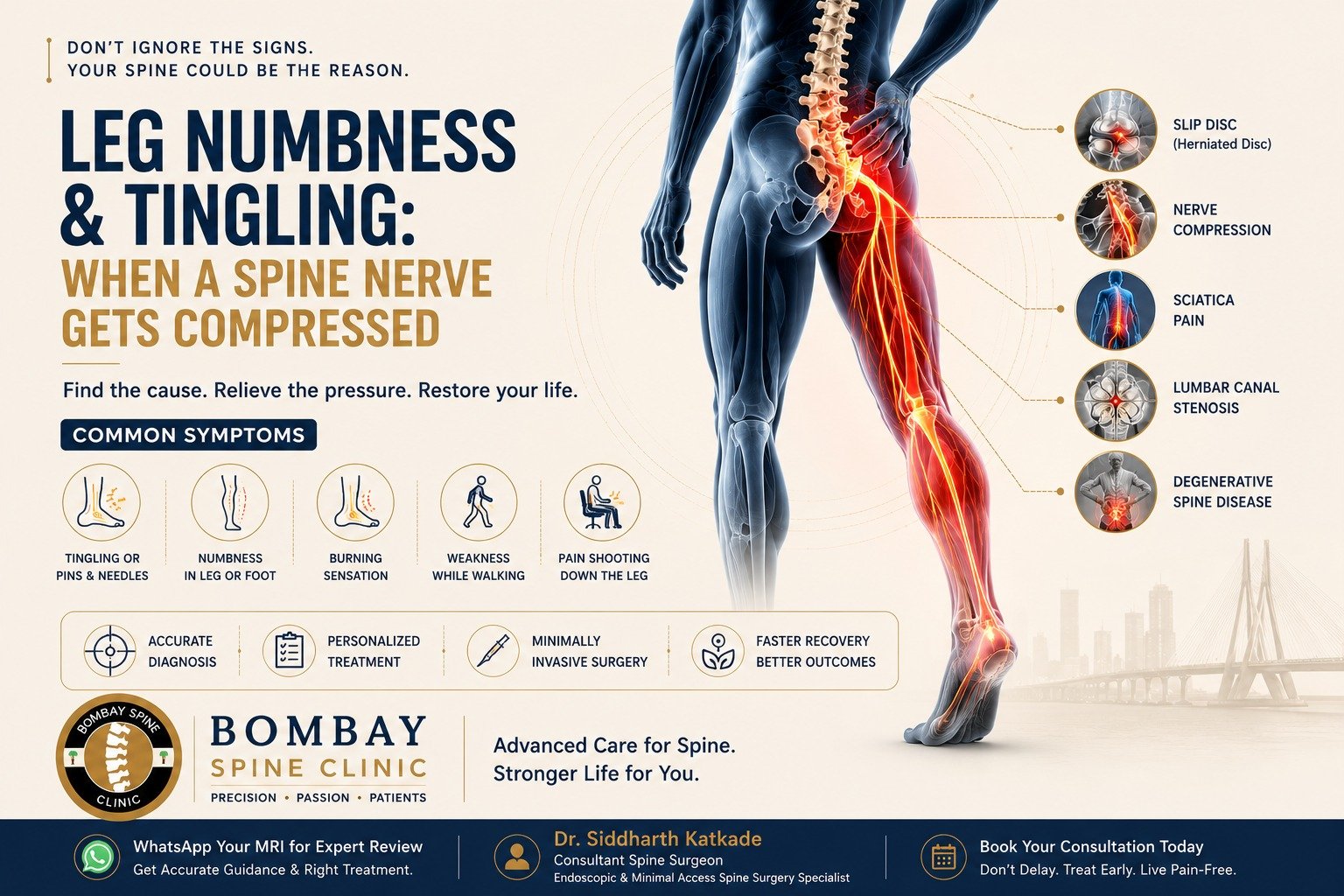
Is Your Leg Feeling Numb, Heavy, or Full of “Pins and Needles”?
Experiencing tingling in your foot, numbness in your toes, burning sensations in your leg, or a persistent feeling of “pins and needles”?
While many people assume these symptoms are caused by poor circulation, vitamin deficiencies, or simple fatigue, the underlying cause may actually be a problem in the spine.
At Bombay Spine Clinic, Dr. Siddharth Katkade frequently evaluates patients whose leg numbness originates from compression of spinal nerves due to conditions such as Slip Disc, Sciatica, and Lumbar Canal Stenosis.
Ignoring these symptoms may allow nerve damage to progress over time.
How Can a Spine Problem Cause Leg Numbness?
The nerves responsible for sensation and movement in your legs originate from the lower spine.
When these nerves become compressed, irritated, or inflamed, normal nerve signal transmission can be disrupted, leading to symptoms such as:
Numbness
Tingling
Burning sensations
Muscle weakness
Difficulty walking
The specific location of numbness often depends on which spinal nerve is affected.
Common Spine Conditions That Cause Leg Numbness
1. Slip Disc (Herniated Disc)
A slipped or herniated disc is one of the most common causes of leg numbness.
When a disc bulges or ruptures, it can press directly on nearby nerve roots.
Common Symptoms:
- Lower back pain
- Pain radiating into the leg
- Tingling in the foot
- Numbness below the knee
- Weakness in the leg
2. Sciatica
Sciatica occurs when the sciatic nerve becomes irritated or compressed.
Common Symptoms:
- Sharp pain traveling from the lower back into the leg
- Burning sensation
- Tingling in the calf or foot
- Numbness on one side of the body
- Difficulty standing or walking comfortably
3. Lumbar Canal Stenosis
Lumbar canal stenosis is more commonly seen in older adults.
It occurs when the spinal canal narrows and compresses the nerves.
Common Symptoms:
- Leg heaviness
- Numbness while walking
- Relief after sitting down
- Reduced walking distance
- Difficulty standing for prolonged periods
4. Degenerative Spine Disease
Age-related wear and tear can gradually narrow the spaces surrounding the spinal nerves, resulting in progressive symptoms.
Common Symptoms:
- Chronic back pain
- Intermittent numbness
- Leg weakness
- Reduced mobility
Warning Signs You Should Not Ignore
Consult a spine specialist if you experience:
Persistent Numbness
Symptoms lasting more than a few weeks require evaluation.
Progressive Weakness
Difficulty climbing stairs or lifting the foot may indicate significant nerve compression.
Balance Problems
Feeling unstable while walking may suggest worsening nerve dysfunction.
Pain Along with Numbness
Combined pain and numbness frequently indicate nerve root irritation or compression.
Symptoms Affecting Daily Activities
If work, driving, sleep, exercise, or mobility are impacted, medical evaluation is recommended.
Can Leg Numbness Become Permanent?
One of the most common concerns among patients is whether numbness can become permanent.
The answer depends largely on how long the nerve remains compressed.
In Many Cases:
Early treatment allows nerve recovery
Symptoms gradually improve
Normal function can return
However, severe or prolonged nerve compression may increase the risk of:
- Persistent weakness
- Chronic numbness
- Permanent sensory changes
This is why early diagnosis and treatment are important.
How Is the Cause Diagnosed?
At Bombay Spine Clinic, diagnosis begins with a detailed assessment.
Clinical Examination
A comprehensive evaluation helps identify:
- Symptom patterns
- Neurological deficits
- Functional limitations
- Potential pain generators
MRI Scan
MRI imaging helps identify:
- Slip discs
- Nerve compression
- Lumbar canal stenosis
- Degenerative spine changes
Personalized Treatment Planning
Treatment recommendations are based on:
- Clinical findings
- MRI results
- Severity of symptoms
- Functional goals
Treatment Options for Spine-Related Leg Numbness
Non-Surgical Treatment
Many patients improve successfully without surgery through:
- Targeted physiotherapy
- Medications
- Lifestyle modifications
- Posture correction
- Core strengthening programs
- Image-guided spinal injections
When Surgery May Be Required
Surgery may be considered when:
- Weakness continues to worsen
- Significant nerve compression is present
- Conservative treatment has failed
- Daily activities are severely affected
- Neurological deficits are progressing
Advanced Spine Surgery Options at Bombay Spine Clinic
Dr. Siddharth Katkade specializes in modern minimally invasive spine procedures designed to reduce tissue disruption and promote faster recovery.
Endoscopic Spine Surgery
Benefits Include:
Tiny incision
Minimal blood loss
Less muscle injury
Faster recovery
Smaller scar
Early return to daily activities
Minimal Access Spine Surgery
This advanced surgical technique helps:
Preserve normal tissues
Reduce post-operative pain
Shorten hospital stay
Improve mobility and recovery
These procedures are particularly beneficial for working professionals seeking faster rehabilitation and minimal disruption to daily life.
Why Patients Trust Dr. Siddharth Katkade
Patients across Mumbai, Navi Mumbai, Thane, and Maharashtra choose Dr. Siddharth Katkade for:
- Expertise in Endoscopic Spine Surgery
- Advanced Minimal Access Spine Surgery
- Personalized treatment plans
- Evidence-based spine care
- Focus on functional recovery
- Patient-centered approach
Frequently Asked Questions (FAQs)
Is leg numbness always caused by a spine problem?
No. Leg numbness may also occur due to diabetes, vitamin deficiencies, circulation problems, or neurological conditions. A proper evaluation is essential.
Can physiotherapy help numbness?
Yes. Many patients experience significant improvement with targeted physiotherapy when nerve compression is mild to moderate.
Does every slipped disc require surgery?
No. Most slipped discs improve with conservative treatment and do not require surgery.
Is Endoscopic Spine Surgery safe?
When appropriately indicated, Endoscopic Spine Surgery offers excellent outcomes, smaller incisions, and faster recovery compared with traditional open surgery.
When Should You See a Spine Specialist?
If you are experiencing:
- Leg numbness
- Tingling sensations
- Burning pain
- Leg weakness
- Persistent “pins and needles”
do not ignore these warning signs.
Early diagnosis and treatment can help prevent long-term nerve damage and improve recovery outcomes.
Book Your Consultation at Bombay Spine Clinic
Consult Dr. Siddharth Katkade
Specialist in Endoscopic Spine Surgery & Minimal Access Spine Surgery, Mumbai
WhatsApp Your MRI for Expert Review
Get expert guidance on whether your symptoms can be managed conservatively or require advanced spine treatment.
Take the first step toward recovery and better spinal health today.


Comments are closed