Dr. Siddharth Katkade is a highly skilled, world wide trained and dedicated Spine Surgeon with over 10+ years of experience in field of specialised Spine Care and Orthopaedics.

Shopping cart

No products in the cart.

Patients guide

Understanding Your Condition

Back Sprain

A back sprain occurs when the ligaments in your spine are overstretched or torn, typically from awkward movements or heavy lifting. It causes localized pain and stiffness that generally improves with rest.

Mechanical Low Back Pain

Mechanical low back pain is triggered by stress or strain on the spine's moving parts, joints, or discs. It typically worsens with physical activity or certain postures and improves when you rest.

Trapezitis

Trapezitis is inflammation of the trapezius muscle, usually caused by poor posture or prolonged desk work. It causes the pain, stiffness, and limited movement in the neck and upper back and shoulders.

Slip Disc

A slipped disc occurs when the soft inner gel of a spinal disc pushes out through a tear in its tough outer layer. This can press on nearby nerves, causing sharp pain, numbness, or weakness.

Sciatica

Sciatica is pain that radiates from lower back down through your hips and into your leg. usually caused by a compressed nerve, leading to sharp pain, tingling, or numbness along the nerve's path.

Cervical Spondylosis

Cervical spondylosis is age-related wear and tear affecting the spinal discs and joints in your neck. It causes neck pain and stiffness, and can sometimes lead to tingling or numbness in the arms.

Peripheral Neuropathy

Peripheral neuropathy is nerve damage that typically affects the hands and feet, often caused by conditions like diabetes. It commonly results in weakness, numbness, and a tingling or burning pain in the affected areas.

Cervical Myelopathy

Cervical myelopathy occurs when the spinal cord becomes compressed in the neck, often due to severe age-related wear and tear. It can lead to clumsiness in the hands, difficulty walking, and weakness or numbness in the limbs.

Lumbar Canal Stenosis

Lumbar canal stenosis is a narrowing of the spinal canal in the lower back that compresses the nerves traveling to your legs, causes pain, numbness, cramping in the legs that worsens when walking or standing and improves when sitting.

Spondylolisthesis

Spondylolisthesis occurs when one of the bones in your spine slips forward out of its proper position onto the bone below it. This slippage can pinch nearby nerves, causing lower back pain, stiffness.

Scoliosis

Scoliosis is an abnormal, sideways curvature of the spine that often develops during the growth spurt just before puberty. It can cause uneven shoulders or hips and may require bracing or surgery in more severe cases.

Kyphosis

Kyphosis is an excessive forward rounding of the upper back that creates a hunched posture. It is often caused by poor posture or age-related spinal changes and can lead to back pain and stiffness.

Osteoporosis

Osteoporosis is a condition that causes bones to become weak and brittle, significantly increasing the risk of fractures. It develops slowly as bone density decreases, often going unnoticed until a minor fall or stress causes a bone to break.

Spine Fractures

A spine fracture is a break or crack in one or more of the bones in your spine, often caused by high-impact trauma or bone-weakening conditions like osteoporosis. It causes severe back pain, limited movement, some cases, nerve damage.

Spine Infection

A spine infection typically occurs when bacteria or fungi invade the bones, discs, or surrounding tissues of the spine. It typically causes severe serious back pain, fever, and can lead to neurological issues if left ignored or untreated or taken lightly.

Spinal TB

Spinal TB, also known as Pott's disease, is a bacterial infection that spreads from the lungs to the bones of the spine. It causes bone destruction and spinal deformity, leading to chronic back pain and potential nerve compression.

Spine Tumors

A spine fracture is a break or crack in one or more of the bones in your spine, often caused by high-impact trauma or bone-weakening conditions like osteoporosis. It causes severe back pain, limited movement, some cases, nerve damage.

Sacroilitis

Sacroiliitis is an inflammation of one or both of your sacroiliac joints, located where your lower spine connects to your pelvis. It typically causes pain in your buttocks or lower back that can extend down one or both legs, often worsening with prolonged standing.

Ankylosing Spondylitis

Ankylosing spondylitis is a chronic inflammatory disease that can cause the vertebrae in your spine to eventually fuse together. This fusion restricts movement, leading to severe stiffness, chronic back pain, and sometimes a hunched posture.

Coccydynia

Coccydynia is localized pain in your tailbone (coccyx) at the very bottom of your spine, often caused by a fall, prolonged sitting, or childbirth. It typically causes an aching or sharp pain that noticeably worsens when you sit down.movement, some cases, nerve damage.

⁠Symptoms & Warning Signs

⁠Symptoms & Warning Signs

Symptoms and warning signs are physical indicators—like severe pain, numbness, or weakness—that signal a potential underlying spinal or nerve issue. Recognizing these early "red flags" is crucial for seeking timely medical evaluation and preventing further complications.

⁠Exercise & Rehabilitation Centre

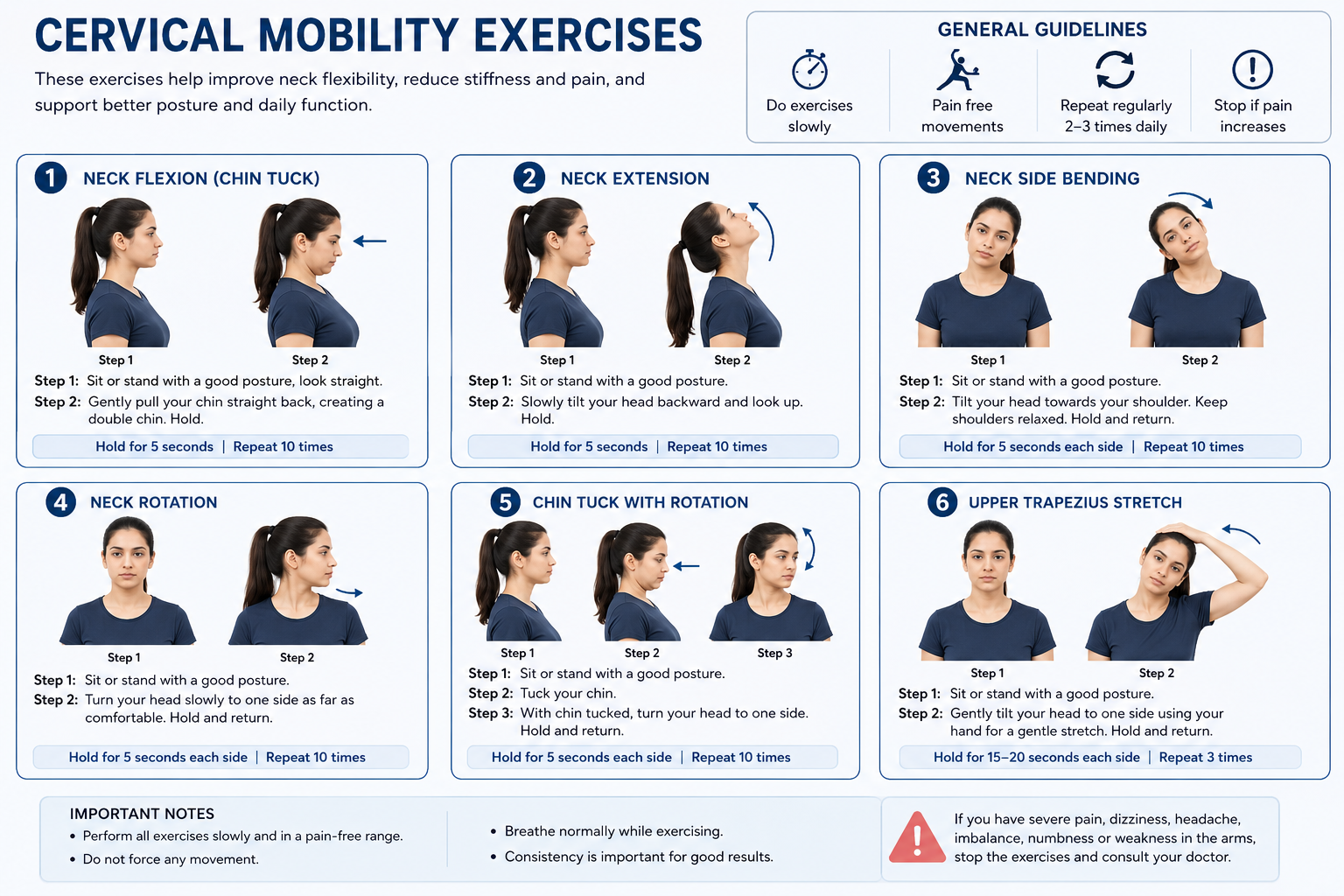
Cervical mobility exercises

Cervical mobility exercises are gentle movements and stretches designed to improve flexibility and range of motion in your neck. They help relieve muscle tension, reduce stiffness, and prevent pain often caused by poor posture or strain.

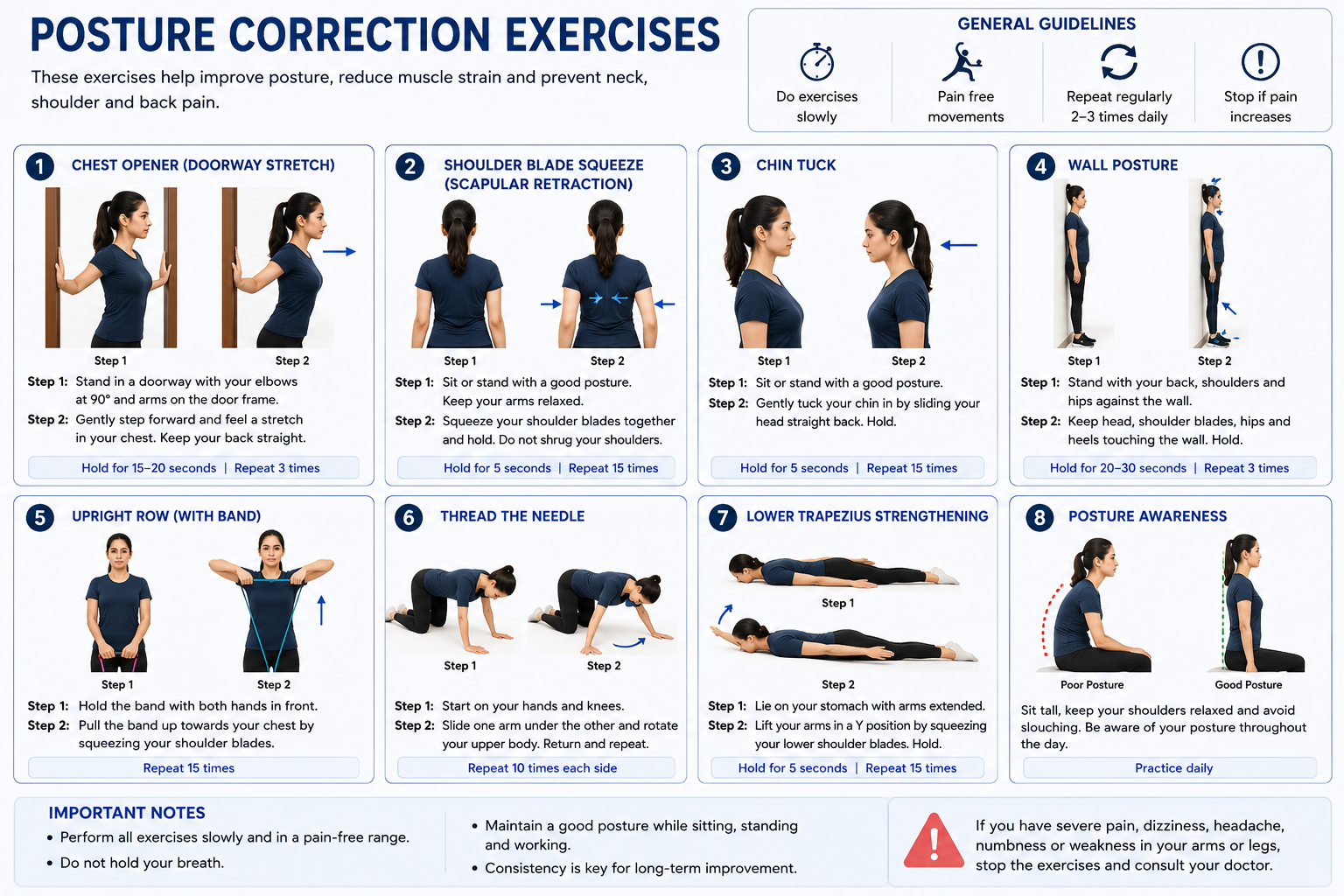
⁠Posture correction exercises

Posture correction exercises are targeted movements designed to strengthen weak muscles and stretch tight ones, helping to properly align your spine and joints. They reduce daily strain, alleviate neck and back pain, and improve your overall body mechanics.

⁠Isometric neck strengthening

Isometric neck strengthening involves tightening your neck muscles against a stationary resistance, like your hand, without actually moving your head. These exercises safely build muscle strength and stability, often aiding in neck pain rehabilitation and injur

McKenzie exercises

McKenzie exercises are a series of targeted movements, often involving spinal extension, designed to assess and treat back and neck pain. They aim to "centralize" radiating pain—moving it from the limbs back to the spine—to relieve nerve pressure and restore mobility.

⁠Core strengthening

Core strengthening exercises target the muscles of your abdomen, lower back, and pelvis to build stability and provide essential support for your spine. They improve your overall balance, help maintain proper posture, and significantly reduce the risk of back injuries.

Stretching exercises

Stretching exercises involve deliberately lengthening specific muscles or muscle groups to improve elasticity and increase your range of motion. They help relieve built-up muscle tension, reduce stiffness, and play a crucial role in preventing injuries and maintaining a healthy, flexible spine.

Sciatica Exercises

Sciatica exercises are targeted movements and stretches designed to relieve pain caused by the compression or irritation of the sciatic nerve. They typically focus on stretching the lower back, glutes, and hamstrings to release muscle tension, reduce nerve pressure, and improve mobility in the lower body.

⁠Post-Surgery Rehabilitation Exercises 1

Phase 1 post-surgery rehabilitation exercises are gentle, low-impact movements introduced shortly after surgery to safely promote blood flow, reduce stiffness, and initiate basic mobility. These initial exercises focus on protecting the surgical site while gradually helping your body begin the healing process.

⁠Post-Surgery Rehabilitation Exercises 2

Phase 2 post-surgery rehabilitation exercises focus on progressing from basic mobility to gently rebuilding muscle strength and restoring everyday function. This phase typically introduces light resistance and more active movements to improve stability around the healing surgical site while safely increasing your overall physical capacity.

⁠Post-Surgery Rehabilitation Exercises 3

Phase 3 post-surgery rehabilitation exercises focus on advanced strengthening and functional conditioning to safely return you to your normal daily activities or sports. This late-stage phase involves dynamic, higher-intensity movements designed to restore full muscle power, endurance, and overall physical performance while ensuring the surgical site is fully stabilized.

Understanding Your MRI & Reports

Understanding Your MRI & Reports

Understanding your MRI and medical reports involves reviewing detailed images of your spine's bones, discs, and soft tissues to accurately diagnose the source of your pain. This process helps your healthcare provider pinpoint issues like nerve compression, herniated discs, or structural abnormalities to develop a highly targeted and effective treatment plan

Treatment Options

⁠Non-Surgical Treatment

Non-surgical treatment, often called conservative care, involves managing spinal conditions and pain without an operation. It typically utilizes a combination of physical therapy, medications, spinal injections, and lifestyle modifications to relieve symptoms, improve mobility, and promote natural healing.

⁠Medications

Medications for spinal conditions are utilized to manage pain, reduce severe inflammation, and alleviate muscle spasms to improve your daily comfort. They range from over-the-counter pain relievers to targeted prescription drugs, often serving as a crucial component of a broader, non-surgical treatment plan to help you stay active and participate in physical therapy.

⁠Physiotherapy

Physiotherapy is a movement-based treatment that utilizes targeted exercises, manual therapy, and specialized techniques to relieve pain and restore your physical function. It plays a vital role in spinal care by strengthening supporting muscles, correcting posture, and improving flexibility to help you recover from injuries and manage chronic conditions effectively.

⁠Lifestyle Modification

Lifestyle modification involves making intentional changes to your daily habits—such as improving workplace ergonomics, managing your weight, quitting smoking, and staying active—to support your long-term spinal health. These everyday adjustments help reduce chronic stress on your back, enhance the effectiveness of other treatments, and play a crucial role in preventing future injuries.

Rehabilitation

Rehabilitation is a comprehensive, structured program designed to help you recover from a spinal injury, surgery, or chronic condition. It combines targeted physical therapies, specialized exercises, and education to safely restore your strength, mobility, and independence, empowering you to return to your daily activities and prevent future setbacks.

⁠Surgical Treatment

Surgical treatment involves operative procedures performed to address severe pain, nerve compression, or structural instability that has not responded to conservative care. These operations—ranging from minimally invasive techniques to complex spinal fusions—aim to relieve pressure on your spinal cord or nerves, stabilize your spine, and significantly improve your long-term mobility and quality of life.

When Surgery Is Required

Surgery is typically required when non-surgical treatments fail to relieve severe, persistent pain that significantly disrupts your daily life. It also becomes medically necessary if you experience progressive nerve damage, such as worsening weakness, numbness, or a loss of bowel and bladder control, which demand immediate intervention to prevent permanent injury.

Benefits & Risks

Weighing the benefits and risks is a critical step in evaluating any spinal treatment plan, whether conservative or surgical. The potential benefits typically include significant pain relief, restored mobility, and an improved quality of life, while the risks involve possible complications ranging from mild medication side effects to more serious surgical issues like infection or delayed healing. Carefully discussing these factors with your healthcare provider ensures you make an informed, safe decision tailored to your specific medical needs.

Recovery Expectations

Recovery expectations provide a realistic outline of the anticipated timeline, healing milestones, and potential outcomes following a spinal treatment or surgery. Setting clear expectations helps you understand the gradual progression of pain relief and mobility recovery, ensuring you remain motivated and aligned with your healthcare team on a safe, structured return to your daily activities.

⁠Advanced Spine Procedures

Minimally Invasive Spine Surgery

Minimally invasive spine surgery uses small incisions and specialized tools to treat spinal conditions. By minimizing damage to surrounding muscles, it offers less pain, shorter hospital stays, and a faster recovery than traditional open surgery.

⁠Endoscopic Spine Surgery

Endoscopic spine surgery is an advanced, ultra-minimally invasive procedure that uses a tiny camera (endoscope) inserted through a micro-incision to treat spinal conditions. It allows surgeons to relieve nerve pressure with virtually no muscle damage, leading to less pain and a very rapid recovery.

Cervical Spine Surgery

Cervical spine surgery involves procedures performed on the neck portion of the spine to treat conditions like herniated discs or spinal stenosis. It aims to relieve pressure on the spinal cord or nerves, significantly reducing neck pain and alleviating numbness or weakness in your arms and hands.

Lumbar Spine Surgery

Microscopic Discectomy, MIS Decompression, MIS TLIF, MIS Fixation

Disc Replacement Surgery

Disc replacement surgery involves removing a damaged or degenerated spinal disc and replacing it with an artificial implant. Unlike traditional spinal fusion, this procedure is designed to preserve your spine's natural motion and flexibility while effectively relieving nerve pressure and pain.

Scoliosis Correction Surgery

Scoliosis correction surgery is performed to straighten and stabilize a severely curved spine. It typically involves spinal fusion—using specialized rods, screws, and bone grafts—to correct the deformity, prevent the curve from worsening, and improve your overall posture and long-term spinal health.

Kyphosis Correction Surgery

Kyphosis correction surgery is performed to straighten and stabilize an abnormally rounded or hunched upper spine. It typically involves spinal fusion—using specialized rods, screws, and bone grafts—to correct the severe deformity, relieve chronic back pain, and improve your overall posture and alignment.

⁠TB Spine Surgery

TB spine surgery is performed to treat severe tuberculosis infections of the spinal bones, often referred to as Pott's disease. The procedure involves removing infected tissue, relieving pressure on the spinal cord or nerves, and stabilizing the spine with hardware to correct deformities and prevent permanent nerve damage.

⁠Spinal Infection Surgery

Spinal infection surgery is performed to treat severe infections affecting the spinal bones, discs, or surrounding tissues. The procedure involves clearing out infected tissue, relieving pressure on the spinal cord or nerves, and often stabilizing the spine to prevent structural collapse and permanent neurological damage.

⁠Spine Trauma Surgery

Spine trauma surgery is performed to repair the spine after a severe injury, such as a fracture or dislocation. It involves relieving pressure on the spinal cord and stabilizing the broken bones with specialized hardware to prevent further neurological damage.

⁠Spine Tumor Surgery

Spine tumor surgery is performed to safely remove abnormal growths affecting the spinal bones, nerves, or spinal cord. The procedure aims to relieve pressure on these sensitive structures, alleviate severe pain, and often involves stabilizing the spine to prevent permanent neurological damage or structural collapse.

Spino-Pelvic Fixation

Spino-pelvic fixation is a surgical procedure that securely anchors the base of the spine to the pelvic bones. Utilizing specialized screws and rods, it provides essential stabilization for severe spinal deformities, pelvic fractures, or complex lower back conditions to restore proper alignment and structural integrity.

Vertebroplasty / Kyphoplasty

Vertebroplasty and kyphoplasty are minimally invasive procedures used to treat painful spinal compression fractures, typically caused by osteoporosis. They involve injecting specialized bone cement into the fractured vertebra to stabilize the bone, relieve severe pain, and—in the case of kyphoplasty—help restore lost spinal height

⁠Preparing For Surgery

⁠Preparing For Surgery

Preparing for surgery involves essential steps to ensure you are physically and mentally ready for your upcoming procedure. This typically includes completing pre-operative medical tests, adjusting your current medications, and making necessary arrangements for your post-surgical care at home. Following these tailored guidelines helps minimize risks and sets a strong foundation for a safe, smooth recovery.

⁠Recovery After Surgery

⁠Post-Operative Care Guide

A post-operative care guide provides essential instructions for safe healing after your procedure. It details wound care, medication management, safe activity levels, and warning signs to help you recover confidently at home.

Wound care

Wound care involves keeping your surgical incision clean and dry to prevent infection and promote proper healing. It includes following your surgeon's specific instructions on changing dressings and monitoring the site for redness, swelling, or discharge

⁠Activity Restrictions

Activity restrictions are specific limits placed on your physical movements after surgery to protect your healing spine. These typically include temporarily avoiding bending, lifting, or twisting, as well as holding off on strenuous exercise and driving until your surgeon clears you.

⁠Walking Program

A walking program is a gradual, structured plan to increase your daily walking after surgery. It helps build stamina, improve circulation, and prevent blood clots, providing a safe way to regain your strength without stressing your healing spine.

⁠Travel Guidelines

Travel guidelines provide essential advice for safely resuming long car rides or flights after your surgery. They typically emphasize taking frequent breaks to walk or stretch, avoiding prolonged sitting, and carrying medical documentation for any implanted hardware to ensure a comfortable journey.

Return To Work

Returning to work after surgery depends on your recovery progress and the physical demands of your job. It requires clearance from your surgeon and often starts with modified duties or part-time hours to safely ease you back into your routine without straining your healing spine.

⁠ ⁠Follow-Up Schedule

A follow-up schedule outlines your required post-operative appointments with your surgeon to closely monitor your healing progress. These routine visits allow your medical team to check your incision, evaluate your recovery, and safely clear you for increased activities.

⁠Diet & Nutrition Centre

⁠Diet & Nutrition Centre

A diet and nutrition center provides personalized dietary guidance to fuel your body's healing process after surgery. It focuses on optimizing your intake of protein, essential vitamins, and hydration to promote tissue repair, bone healing, and overall strength.

Download diet charts

Vitamin D Food Sources Guide Bombay Spine Clinic

Calcium Rich Foods Guide Bombay Spine Clinic

Daily Spine Health Diet Chart Bombay Spine Clinic

High Protein Diet After Spine Surgery Bombay Spine Clinic

Indian Non Vegetarian High Protein Diet Bombay Spine Clinic

Indian Vegetarian High Protein Diet Bombay Spine Clinic

Patient FAQs

⁠General Spine Questions

⁠Back Pain & Slip Disc Questions

Neck Pain & Cervical Spine Questions

Spine Surgery Questions

Recovery After Surgery Questions

⁠Bone Health & Osteoporosis Questions

MRI & Investigations Questions

⁠Lifestyle & Exercise Questions

⁠Spine Infections & Spine Tumours Questions

⁠Pain Management & Non-Surgical Treatments

Children & Elderly Patients Questions

⁠Consultation & Second Opinion Questions

Downloads & Patient Resources

⁠Diet Charts

Travel Guide

MRI Preparation Guide

Spine Tips